
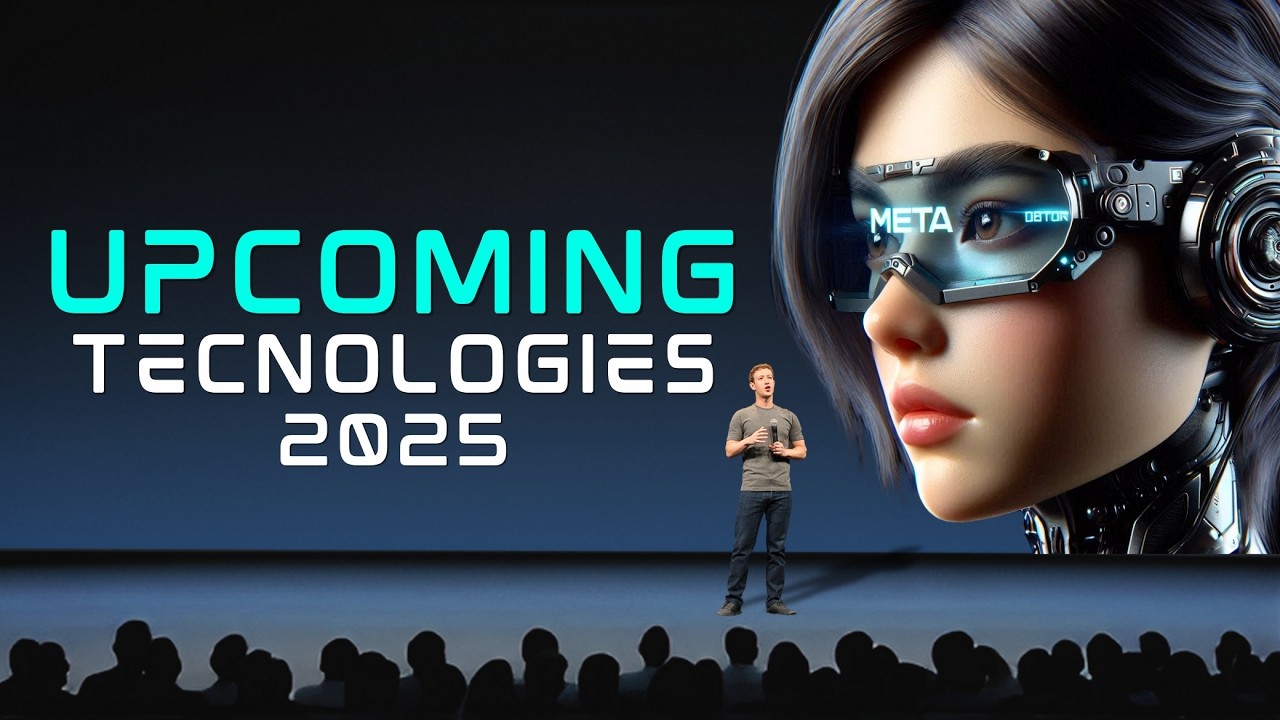
The pace of technological change is nothing short of astonishing. Innovations like artificial intelligence (AI), 5G connectivity, and blockchain technology are reshaping industries at an extraordinary rate. These advancements are not just futuristic concepts; they are here and actively altering how we work, live, and conduct business. In this article, we will explore the 20 most important technology trends that are set to define our future and influence a plethora of sectors including healthcare, entertainment, and manufacturing.
1. Artificial Intelligence and Machine Learning
Artificial Intelligence (AI) and Machine Learning (ML) are no longer just buzzwords; they are integral to numerous industries. From personalized healthcare solutions to sophisticated fraud detection in finance, AI enables machines to learn from vast amounts of data and make informed decisions with minimal human intervention.
- Market Value: The AI market is projected to reach $190 billion by 2025.
- Advancements: Key areas include natural language processing (NLP), computer vision, and predictive analytics.
- Challenges: Job automation and algorithmic bias are concerns that accompany AI's rise.
2. 5G Technology
5G technology is heralded as a major game changer, promising ultra-fast internet speeds, low latency, and the capability to connect millions of devices seamlessly. It is a foundational technology for future smart cities and autonomous vehicles.
- Market Growth: By 2026, the 5G market is expected to be valued at approximately $667.95 billion.
- Challenges: High infrastructure costs and regulatory hurdles have slowed its implementation.
3. Internet of Things (IoT)
The Internet of Things (IoT) connects physical devices and allows them to communicate and exchange data. This trend is vital for improving efficiency across various sectors, including manufacturing and transportation.
- Market Forecast: The IoT market is projected to reach $1.6 trillion by 2025.
- Challenges: Increased connectivity poses security vulnerabilities, leading to more frequent cyber attacks.
4. Edge Computing
Edge computing brings data processing closer to the source, alleviating some of the delays and bandwidth issues associated with traditional cloud services. This is particularly crucial for applications that require real-time data processing, like self-driving cars.
- Market Growth: Expected to grow from $4 billion in 2020 to $15.7 billion by 2025.
- Challenges: Management of distributed networks can be complicated and costly.
5. Blockchain Technology
Often associated with cryptocurrencies, blockchain technology offers a secure and transparent way to conduct transactions across a variety of fields. Its applications extend well beyond finance into areas like supply chain management and healthcare.
- Market Growth: The blockchain market is expected to expand to $39.7 billion by 2025.
- Challenges: High energy consumption and scalability must be addressed for widespread adoption.
6. Augmented Reality (AR) and Virtual Reality (VR)
AR and VR technologies are redefining how we experience the digital world, from immersive gaming to practical training simulations.
- Market Prediction: The AR/VR market could reach $29.2 billion by 2025.
- Challenges: High costs of equipment still present a barrier to entry.
7. Quantum Computing
Quantum computing promises to revolutionize problem-solving in fields that require substantial computational power, such as drug discovery and cryptography.
- Market Outlook: This market could reach $64.98 billion by 2030.
- Challenges: Stability and error rates remain significant roadblocks in practical applications.
8. Robotic Process Automation (RPA)
RPA involves automating repetitive tasks traditionally performed by humans, resulting in increased efficiency across organizational processes.
- Market Growth: Projected to grow from $1.89 billion in 2020 to $3.74 billion by 2028.
- Challenges: High implementation costs and potential job losses are concerns that organizations need to manage.
9. Enhanced Cybersecurity
With the rise of cyber threats, innovative cybersecurity technologies are evolving to protect sensitive data through AI-driven threat detection and zero-trust architectures.
- Market Expansion: The cybersecurity market is expected to surpass $248.26 billion by 2024.
- Challenges: Organizations must continuously innovate to stay ahead of increasingly sophisticated threats.
10. Sustainable Technology
Sustainable technology focuses on minimizing environmental impact through innovations in green energy, recycling, and waste management.
- Market Projection: Expected to grow from $36.6 billion by 2027.
- Challenges: Large initial investments and existing infrastructure limitations hinder scalability.
11. Human Augmentation
Technologies that enhance human capabilities through exoskeletons and wearable devices are on the rise, enabling improvements in healthcare and personal productivity.
- Market Value: Anticipated to reach $298.50 billion by 2027.
- Challenges: Privacy concerns and accessibility issues are prevalent.
12. AI-Augmented Development
AI tools are transforming software development by automating code generation and debugging, significantly accelerating the development cycle.
- Risks: Over-reliance on AI could potentially introduce vulnerabilities in software security.
13. Industry Cloud Platforms
Customized cloud solutions for specific industries are becoming increasingly valuable for regulatory compliance and operational efficiency.
- Market Anticipation: Expected to reach $83 billion by 2025.
14. Smart Apps
Smart apps leverage AI to deliver personalized experiences and task automation across various sectors like finance and healthcare.
- Market Growth: Projected to grow to $62.4 billion by 2025.
15. Democratized Generative AI
Generative AI tools that create content are becoming more accessible to the public, encouraging creativity in marketing and design.
- Concerns: There are rising issues regarding copyright infringement and misuse of generated content.
16. Continuous Threat Exposure Countermeasure (CTE)
CTE tools allow organizations to monitor vulnerabilities in real-time, helping businesses stay ahead of cyber threats.
17. AI Trust, Risk, and Security Management (AI TRISM)
Frameworks focusing on ethical AI deployment are crucial for managing bias and ensuring transparency in algorithms.
18. Platform Engineering
This trend integrates cloud infrastructure with development tools to streamline the deployment process.
19. Machine Customers
AI systems capable of making autonomous purchasing decisions are set to change the landscape of B2B and B2C transactions.
20. Augmented Connected Workforce
With the rise of remote work, the augmented connected workforce utilizes collaboration tools and wearable tech to enhance productivity.
Each of these trends highlights the incredible potential of technology to shape our future. As these innovations evolve, they will undoubtedly create new industries, improve existing systems, and challenge us to adapt in ways we may not fully understand yet. The only certainty is that our relationship with technology will continue to deepen, providing countless opportunities—and challenges—along the way.
For those invested in the future of technology, keeping abreast of these trends is crucial. Embrace change, foster innovation, and prepare for the transformations that lie ahead!